.jpg&w=1080&q=75)
AI Automation Just Hit $1.2B. Build It Yourself for Rs 2,000

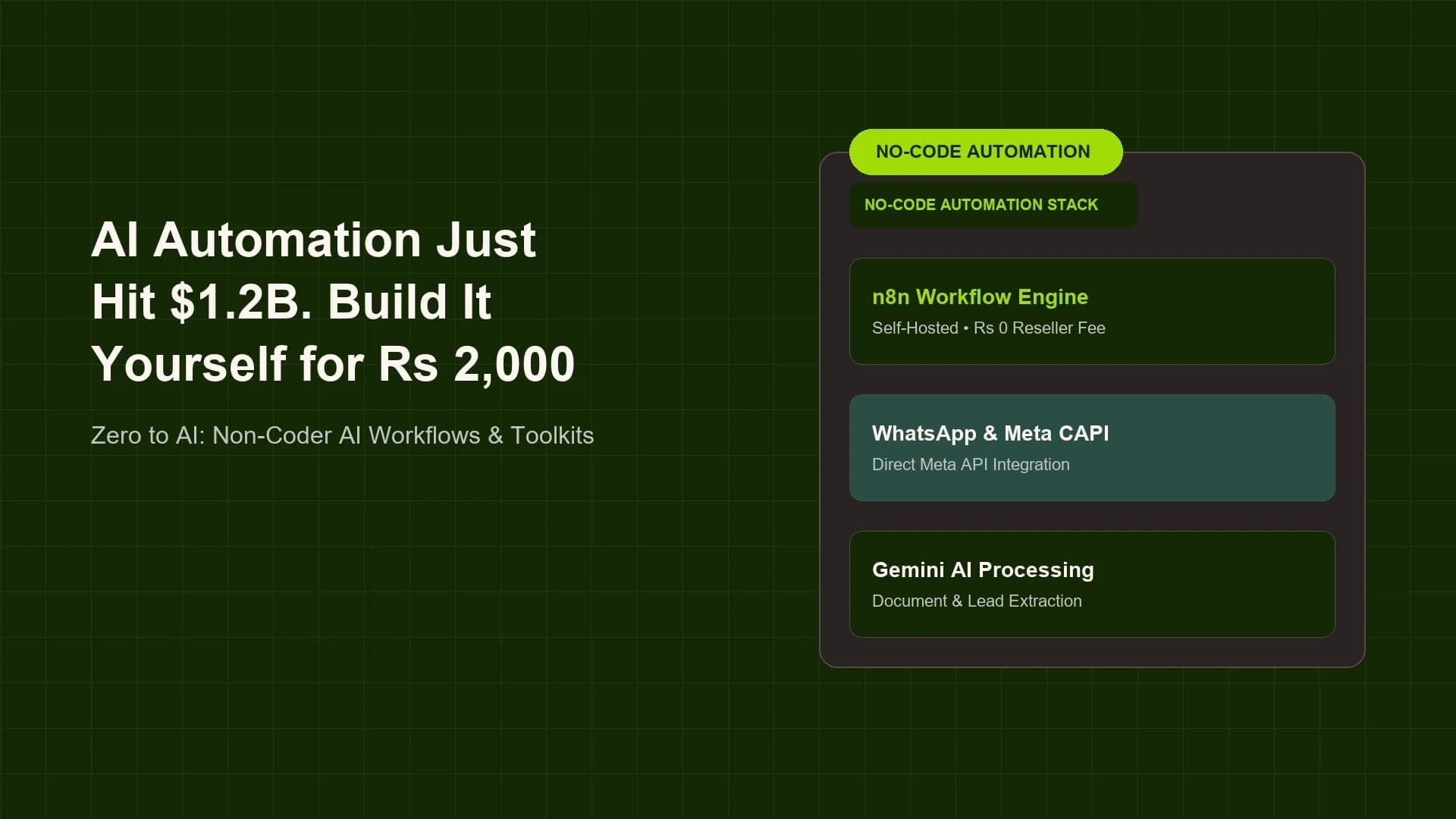
AI automation for small business India means linking a trigger — a lead, a form, a message — to an AI step and an automatic action, using no-code tools like n8n. A startup called HappyRobot just raised $150 million selling this exact category to DHL and Uber. You don't need their $1.2 billion valuation to build the same thing yourself.
HappyRobot, a Madrid-based startup, closed a $150 million Series C on 4 August 2026, pushing its valuation to $1.2 billion. Its product automates operational workflows — voice calls, emails, documents — for enterprise clients including DHL, Uber, and Kuehne + Nagel. Revenue is reportedly up more than 5x since its Series B less than a year earlier. That's a real, well-funded bet that AI workflow automation is valuable. It's also proof that the underlying idea — trigger, AI step, action — isn't complicated. It's expensive to sell at enterprise scale, not expensive to build for one small business.
What HappyRobot Actually Sells (And Why It's Not Magic)
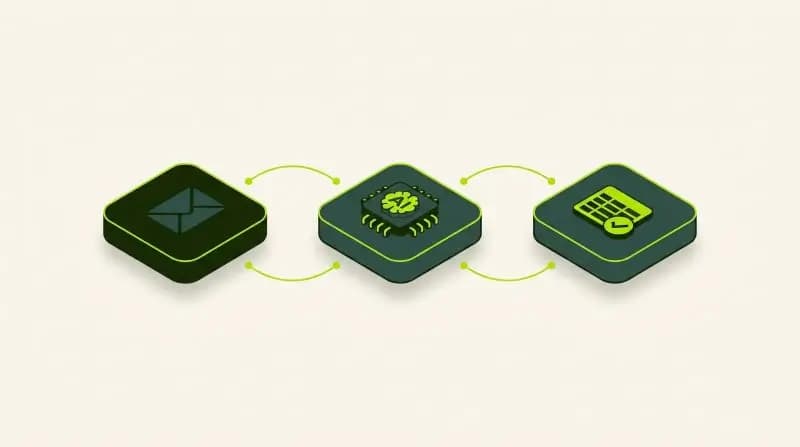
HappyRobot's platform lets large companies deploy AI agents that handle voice calls, emails, and documents across complex operational workflows — think a logistics company automating freight-booking calls at scale. The mechanism is the same one taught in any decent no-code automation course: something happens (a call comes in, a form is submitted), an AI model processes it, and an action fires automatically.
What HappyRobot is really selling to a company like DHL is scale, reliability, and integration work across hundreds of enterprise systems — not a fundamentally different technology than what's available to anyone with an n8n account and an API key. The $1.2 billion valuation reflects how much large enterprises will pay to not build this themselves. It doesn't mean a solopreneur needs anywhere near that budget to get a working version for their own business.
This is worth sitting with for a moment: a company raised $200 million in total funding, at a $1.2 billion valuation, for a product whose core mechanism — trigger, AI reasoning, action — is publicly documented and buildable by anyone with a no-code tool. That's not a criticism of HappyRobot; enterprise sales, compliance, and reliability at scale are genuinely hard and worth paying for. It's a reminder that the underlying capability driving that valuation is now accessible enough that AI automation for small business India doesn't require venture funding, just a weekend and a clear first use case.
The DIY Version: What ₹2,000/Month Actually Buys
- n8n (free self-hosted, or ~₹800/month cloud) — the trigger-to-action workflow engine, the same core mechanism HappyRobot is built on.
- Claude or ChatGPT API access (~₹800–₹1,200/month at small-business volume) — the AI reasoning step that reads the incoming message and decides what to do.
- WhatsApp Business API or a form tool (often free at low volume) — where your triggers actually come from: a customer message, a form submission, a missed call.
That's the entire stack. No enterprise integration team, no $150 million round, no procurement process — just the same trigger-AI-action pattern, sized for one business instead of 150 enterprise accounts across multiple industries.
Walkthrough: Building Your Own Version
- Pick one repetitive task — answering the same WhatsApp question fifteen times a day is a good first candidate, not your entire operation.
- Set the trigger. In n8n, connect a WhatsApp or form webhook so a new message starts the workflow automatically.
- Add the AI step. Route the incoming message to Claude or ChatGPT via API with a short instruction: read this message, draft a reply in this tone, flag anything that needs a human.
- Add the action. Send the drafted reply back automatically, or — safer for a first build — post it to your own WhatsApp for a one-tap approval before it sends.
- Watch it for a week before trusting it fully. HappyRobot's enterprise clients have dedicated QA teams reviewing edge cases around the clock. You are your own QA team here, so start with a human-approval step, not full autonomy, until you've genuinely earned the confidence to remove it.
HappyRobot vs the DIY Version
HappyRobot (Enterprise) | DIY (n8n + Claude/ChatGPT) | |
|---|---|---|
Cost | Enterprise contract pricing, not public | ~₹2,000/month or less |
Scale | Hundreds of enterprise accounts, high call volume | One business, one or two workflows to start |
Setup | Vendor-managed integration | You build and maintain it yourself |
Core mechanism | Trigger → AI agent → action | Identical: trigger → AI agent → action |
Support | Dedicated enterprise support | Community docs, forums, and your own testing |
The mechanism is the same row for row. What you're actually paying HappyRobot's enterprise customers to avoid is the setup time and ongoing maintenance — which, at the scale of one small business, is a manageable weekend project rather than a $150 million problem that needs a dedicated engineering org to solve.
Where This Breaks Down (Be Honest With Yourself)
A DIY automation built in a weekend is not equivalent to a platform with dedicated enterprise support and years of edge-case hardening. If you're processing thousands of interactions a day, or the cost of a mistake is severe (financial transactions, medical information), the gap between a hobbyist build and an enterprise platform is real and matters. For most small businesses handling dozens to a few hundred interactions a day, that gap is smaller than the price difference suggests — but it isn't zero, and a human-review step in your first version is there for exactly this reason. Revisit the human-approval step only once you've watched the workflow run correctly for at least a couple of weeks without intervention.
If you want the structured version of this same build, our [AI agent building course](/courses) walks through the whole trigger-to-action pattern with a real project, and our [n8n beginner's guide](/blogs/n8n-beginners-guide-non-coder-ai-workflows-2026) covers the automation engine itself in more depth. For a broader look at what "building with AI" versus just using it actually looks like, see our piece on [why only 20% of India's workforce builds with AI](/blogs/only-20-percent-india-builds-with-ai-2026) — this HappyRobot story is a large-scale version of exactly that gap.
What This Means for Small Business AI Automation in India Specifically
Indian small businesses have a cost advantage that enterprise buyers don't: you're not negotiating a vendor contract, running a procurement process, or paying for integrations across a hundred legacy systems. A WhatsApp-triggered lead bot for a single-location business is a fundamentally smaller problem than automating freight-booking calls across a multinational logistics network. That size difference is exactly why AI automation for small business India can realistically run on a few hundred rupees of API usage a month, while the same underlying pattern justifies a billion-dollar valuation at enterprise scale.
Frequently Asked Questions
What does "AI automation" actually mean for a small business?
It means connecting something that happens in your business — a new lead, a customer message, a form submission — to an AI step that processes it, and an action that responds automatically. It's the exact mechanism enterprise platforms like HappyRobot sell at scale, built instead for one business at a fraction of the cost.
Is DIY AI automation as reliable as an enterprise platform like HappyRobot?
Not for high-stakes or extremely high-volume use cases — enterprise platforms have dedicated QA and support that a solo DIY build doesn't. For most small businesses automating a handful of repetitive tasks at modest volume, a well-built DIY workflow with a human-approval step is reliable enough to trust.
How much does DIY AI automation cost for a small business in India?
A basic setup using n8n and Claude or ChatGPT API access typically runs under ₹2,000 per month at small-business volume, sometimes less if you self-host n8n for free and only pay for AI API usage. This is a fraction of what enterprise platforms charge for the same trigger-to-action mechanism at scale.
Do I need to know how to code to build this myself?
No. n8n is a visual, no-code workflow tool — you connect blocks rather than write code, and the AI step is a configuration, not a programming task. The main skill is understanding the trigger-AI-action pattern well enough to wire it correctly, which is exactly what a project-based no-code course is designed to teach, hands-on.
Learn to build AI workflows that handle your busywork — live sessions, real projects, zero code.
See the courseBeginner-friendly