
.jpg&w=1080&q=75)
5 AI Tools You Must Learn in 2026 to Stay Employed

5 AI Tools You Must Learn in 2026 to Stay Employed
Heres the uncomfortable truth about AI and jobs in 2026: AI is not replacing workers. Its replacing workers who dont use AI.
The professionals getting hired, promoted, and paid more in 2026 are the ones whove learned to work alongside AI effectively — not the ones whove mastered more traditional skills or the ones whove avoided AI tools entirely.
The good news: the tools you need to learn are not complicated. You dont need to become a machine learning engineer. You need to become proficient with five specific tools, learned in a deliberate order.
Here they are — ranked by career impact, not popularity.
Why This List Exists (And How to Use It)
Most best AI tools lists are tool dumps. They list 30 products without explaining which ones actually matter for your career, in what order to learn them, or what proficiency looks like.
This list is different:
- 5 tools, not 30— focus beats breadth at every stage of learning
- Ordered by progression— each tool builds on the last
- Career-first framing— we explain the specific professional value of each one, not just what it is
- Practical starting point— each tool has a clear action you can take today
Work through this list. By tool 5, youll have the AI foundation that the top 10% of knowledge workers in your field are building right now.
Tool 1: Claude (Start Here)
Why its first: Claude is the highest-quality AI reasoning assistant available in 2026. It follows complex instructions precisely, produces nuanced long-form writing, analyzes documents deeply, and operates with a 200,000-token context window that handles entire reports, contracts, and codebases in a single conversation.
The career impact: Every knowledge worker — writer, analyst, marketer, ops manager, lawyer, product manager — has work that involves processing information, generating written output, or making sense of complex material. Claude does all three better than alternatives.
What proficiency looks like:
- Can write a complex prompt that produces a professional-grade first draft
- Knows how to use Claude for document analysis (paste a contract, ask specific questions)
- Uses Claudes computer use feature to automate repetitive tasks
- Has a library of prompt templates for the recurring tasks in their specific role
Start today: Sign up at claude.ai (free tier available). Take your most recent work task — a report, an email draft, a research summary — and try to complete it 50% faster using Claude. Notice where it helps and where it needs guidance. That gap is where your prompt engineering skill grows.
Tool 2: ChatGPT
Why its second: ChatGPT covers the feature territory Claude doesnt. Image generation (DALL-E), real-time web browsing, data analysis on uploaded spreadsheets, voice mode, and a broad plugin ecosystem. For multimodal work — anything involving images, video, or live data — ChatGPT is the practical choice.
The career impact: Marketers need images. Analysts need to query spreadsheets. Sales professionals need real-time competitor research. Any professional in a role with visual deliverables or time-sensitive information needs ChatGPTs capabilities in their toolkit.
What proficiency looks like:
- Uses Advanced Data Analysis to produce charts and insights from spreadsheet uploads
- Uses DALL-E for visual content creation, presentation graphics, or social media imagery
- Uses web browsing for market research, competitive intelligence, and fact-checking
- Knows when to use ChatGPT vs. Claude for a given task
Start today: Upload a real spreadsheet you work with and ask ChatGPT to identify the three most important trends in the data. The first time you see it generate a chart from your own data in seconds, the career value becomes immediately obvious.
Tool 3: Perplexity AI
Why its third: Perplexity is what search should have become. It combines real-time web access with AI reasoning — giving you sourced, synthesized answers to research questions instead of a list of links to read.
The career impact: Research is one of the most time-consuming parts of any knowledge-work role. Competitive analysis, industry trend tracking, due diligence, fact-checking, citation gathering — Perplexity collapses the time these tasks take. Professionals who use it for research routinely report completing in 20 minutes what previously took 2 hours.
What proficiency looks like:
- Uses Perplexity as the default starting point for any research task
- Knows how to ask follow-up questions to go deeper on specific findings
- Uses Perplexity Pros deep research mode for complex, multi-source synthesis
- Cites Perplexity sources accurately in professional deliverables
Start today: Replace your next three Google searches with Perplexity queries. Make them research-quality questions, not simple lookups: What are the key regulatory changes affecting SaaS companies in the EU in 2026? vs. EU SaaS regulation. Notice the difference in answer quality and time saved.
Tool 4: NotebookLM
Why its fourth: NotebookLM is Googles AI tool for working withyourdocuments. You upload PDFs, reports, transcripts, research papers, or any written material — and it becomes a grounded AI expert on only that content.
The career impact: Every professional has a pile of documents they need to synthesize — client files, industry reports, meeting transcripts, proposal archives, training materials. NotebookLM turns those documents into a queryable knowledge base. Ask questions, get answers with direct source citations. Generate summaries, briefings, study guides, and FAQs from your own material.
What proficiency looks like:
- Has built a NotebookLM notebook for their core reference documents (client files, research, SOPs)
- Uses it to quickly answer questions during client calls instead of searching through files manually
- Generates meeting briefings from uploaded transcripts
- Creates training materials from existing documentation
Start today: Upload the last five work documents youve had to reference more than once — reports, client briefs, research. Ask NotebookLM what are the three most important decisions or recommendations in these documents? See how quickly it synthesizes across all five.
Tool 5: n8n (The Automation Layer)
Why its fifth: n8n is the tool that makes everything else automated. Its an open-source, visual workflow automation platform that connects AI tools (Claude, ChatGPT, Perplexity) with your existing business tools (Gmail, Slack, Notion, Airtable, HubSpot) to create workflows that run without you.
The career impact: Tools 1–4 make you faster when youre actively working. n8n makes work happenwithout you working. Automated lead research, AI-generated weekly reports, intelligent email routing, automatic content repurposing — n8n is the platform where AI assistance becomes AI infrastructure.
What proficiency looks like:
- Has built at least one workflow that runs automatically without manual triggering
- Can connect Claude or ChatGPT to a data source (spreadsheet, form, CRM) for intelligent processing
- Has automated at least one task that previously required 30+ minutes of manual work per week
- Understands the difference between triggers, actions, and conditional logic in workflow design
Start today: Go to n8n.io and work through their beginner tutorial. Build a simple workflow that takes a form submission and emails a summary to yourself, with an AI-generated response draft. Once you build your first working automation, the creative possibilities become obvious.
The Learning Order Matters
Heres why this sequence works:
- Claude— builds your foundational AI communication skill (prompt engineering)
- ChatGPT— extends your capabilities into multimodal and real-time domains
- Perplexity— makes research dramatically faster using your new AI-native instincts
- NotebookLM— teaches you to work with your own knowledge using AI
- n8n— connects everything into automated workflows using what youve learned
Each tool builds on the mental models from the previous one. Trying to start with n8n before understanding AI prompting is like trying to run before you can walk.
What Comes After These 5
Once youve achieved working proficiency with all five, the next tier depends on your career direction:
- For content and marketing: Add Descript (AI video editing) and Midjourney or Luma Uni-1 (AI image generation)
- For developers: Add GitHub Copilot and Claudes computer use/API
- For operations and consulting: Add Make.com alongside n8n, and explore industry-specific AI tools in your sector
- For entrepreneurs: Add Voiceflow (chatbot building) and the relevant AI for your product domain
The foundation is the same for everyone. The specialization comes after.
Your competition is learning these tools right now. Start with Tool 1 today:How to Use Claude to Make Money in 2026.
Frequently Asked Questions
How long does it take to learn these 5 tools?With deliberate daily practice (30–60 minutes/day), you can reach working proficiency with tools 1–3 in about 4 weeks. Tools 4 and 5 take another 2–4 weeks each. Full foundation: approximately 3 months.
Do these tools require a paid subscription?Claude and ChatGPT have free tiers that are good enough to learn on. Perplexity and NotebookLM are free with optional paid tiers. n8n is free to self-host (or ~'$20/month for the cloud version). Total paid cost if you go premium across all: approximately $60–'$80/month.
What if I can only learn one AI tool right now?Start with Claude. It has the highest general-purpose career value and will improve the most work tasks immediately.
Is AI literacy now required for jobs?Increasingly, yes. A 2026 IMF report found that AI literacy is a growing factor in hiring and performance evaluation across knowledge-work roles. The question is no longer whether employers want AI-literate employees — its whether youll be one of them.
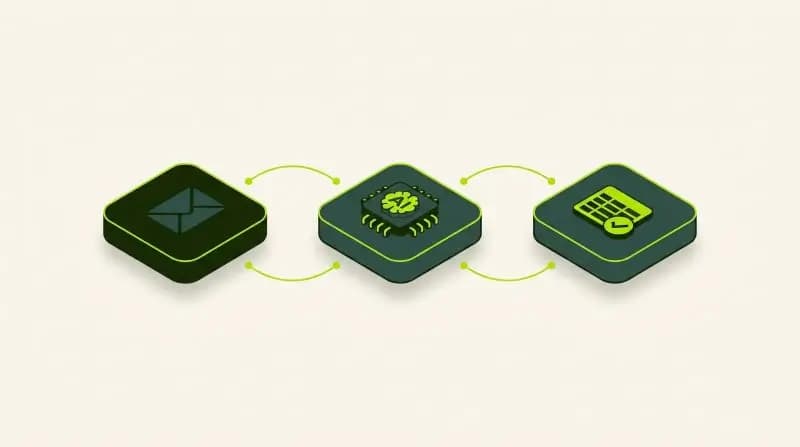
Learn to build AI workflows that handle your busywork — live sessions, real projects, zero code.
See the courseBeginner-friendly