.jpg&w=1080&q=75)

How to Build a No-Code AI Competitor Monitoring & Market Research Pipeline in 2026

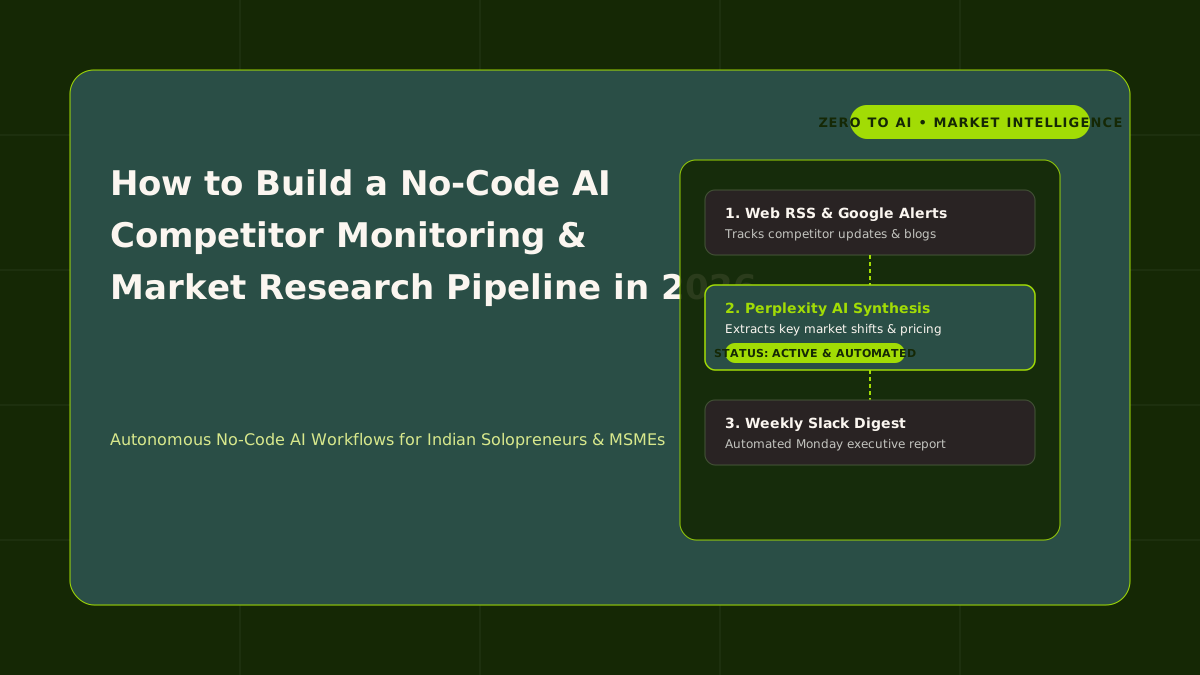
Small business owners build no-code AI competitor monitoring pipelines by connecting web RSS feeds, Perplexity AI, and Make automation to compile automated weekly intelligence reports on competitor pricing, product features, and marketing campaigns.
Keeping track of market developments, competitor pricing updates, new product releases, and industry news is essential for business growth. However, manual web searching, checking social media channels daily, and bookmarking competitor blogs wastes valuable hours and produces fragmented insights. In 2026, agile solopreneurs, digital marketers, and SaaS founders build automated no-code market intelligence pipelines that continuously monitor market signals and summarize actionable insights directly into team dashboards.
By automating market intelligence collection, business leaders identify emerging industry opportunities early and adjust strategic positioning proactively.
Manual Market Research vs Automated AI Competitor Intelligence Pipeline
Comparing traditional manual research against an automated no-code AI tracking engine demonstrates clear analytical superiorities:
Operational Parameter | Manual Competitor Research | Automated No-Code AI Intelligence Pipeline |
|---|---|---|
Data Collection Frequency | Sporadic weekly or monthly manual checks | Continuous real-time automated web scanning |
Information Sources | Limited to manual browser bookmarks | Multi-channel RSS, Google Alerts, & social feeds |
Analysis Speed | Hours spent compiling manual notes | Instant AI-generated executive summaries |
Insights Distribution | Isolated in individual employee notes | Automated central digests delivered to Slack or Email |
Cost Efficiency | Heavy reliance on expensive market research tools | Pay-as-you-go automation under 1,500 INR monthly |
Architecture of a No-Code AI Intelligence Pipeline
An automated competitor monitoring engine operates via a 4-layer intelligence architecture:
[Competitor Blogs & News Feeds] ──> [Make / n8n RSS Aggregator] ──> [Perplexity AI Analysis Engine] ──> [Weekly Slack & Email Digest]1. Data Ingestion & Signal Layer
Public RSS feeds, Google Search Alerts, and web scraping webhooks capture raw updates from competitor websites, product blogs, and industry news outlets.
2. Automation Routing & Filter Layer
Make.com or n8n aggregates raw data items, removes duplicate posts, and batches news updates into structured JSON payloads.
3. Perplexity & Claude Synthesis Layer
Perplexity AI searches live web context while Claude 3.5 Sonnet categorizes updates into strategic themes such as pricing changes, new feature launches, or messaging shifts.
4. Executive Delivery Layer
The synthesized market intelligence digest is formatted into clean markdown and pushed directly to Slack channels, Notion databases, or executive email inboxes.
Step-by-Step Blueprint to Launch Your Competitor Monitoring System
Follow this 5-step implementation guide to set up your automated market research pipeline without coding:
- Map Target Competitors & Public Feeds: Identify top 5 direct competitors and collect their RSS feeds, blog URLs, press release pages, and official social media handles.
- Configure Feedly or Inoreader RSS Collectors: Consolidate all competitor web feeds into a central RSS reader folder to generate a single unified output feed.
- Build a Make.com Automation Scenario: Create a new scenario in Make using the RSS Watch Items module as your primary trigger.
- Integrate Perplexity API for Trend Analysis: Connect the Perplexity AI module to research recent web developments associated with extracted headlines.
- Format and Schedule Weekly Slack Digests: Add a Slack or Gmail node to send a structured weekly summary report every Monday morning at 9:00 AM IST.
Competitive Intelligence Prompt Blueprint
Use this specialized analysis prompt to turn raw news updates into strategic executive summaries:
Market Intelligence Analysis Prompt:
"You are a Senior Strategic Market Analyst.
Input Data: {Raw_Competitor_Feeds_and_Headlines}

Task: Synthesize the input data into a structured Competitive Intelligence Summary:
1. Major Product & Feature Updates: Identify any new software features, product launches, or service tier changes.
2. Strategic Messaging Shift: Detail any changes in competitor positioning, value propositions, or campaign messaging.
3. Pricing & Packaging Changes: Highlight any observable changes in pricing models or discount structures.
4. Recommended Counter-Actions: Provide 2 actionable strategic recommendations for our internal business team.

Format: Use bullet points, bold key terms, and maintain a neutral analytical tone."
Ethical Guidelines and Data Boundaries
Building a market intelligence pipeline requires strict compliance with ethical and legal standards:
- Public Data Usage Only: Limit data collection strictly to publicly available website pages, official press releases, public RSS feeds, and open social media posts.
- Respect Web Scraping Limits: Ensure automation frequency respects website rate limits and robots.txt directives to avoid overloading target servers.
- Focus on Actionable Strategy: Avoid collecting clutter; configure filters to highlight meaningful strategic moves rather than minor site design changes.
Frequently Asked Questions (FAQs)
Is building an automated competitor monitoring pipeline legal?
Yes, collecting and analyzing publicly available web content, press releases, and RSS feeds for internal market research is standard commercial practice.
Which tools are best for building a no-code intelligence pipeline?
Combining Feedly or Inoreader for feed aggregation, Make.com or n8n for workflow orchestration, and Perplexity AI for synthesis creates a robust intelligence stack.
How much does an automated AI competitor tracking system cost per month?
Running a basic intelligence pipeline using free-tier RSS readers, standard Make.com operations, and pay-as-you-go Perplexity API calls costs under 1,500 INR per month.
How often should market intelligence digests be delivered to team members?
Weekly digests delivered on Monday mornings are optimal for most small business teams, preventing information overload while maintaining strategic awareness.

Learn to build AI workflows that handle your busywork — live sessions, real projects, zero code.
See the courseBeginner-friendly