.jpg&w=1080&q=75)
How Solopreneurs & Small Businesses Build a No-Code AI Content Marketing Pipeline in 2026

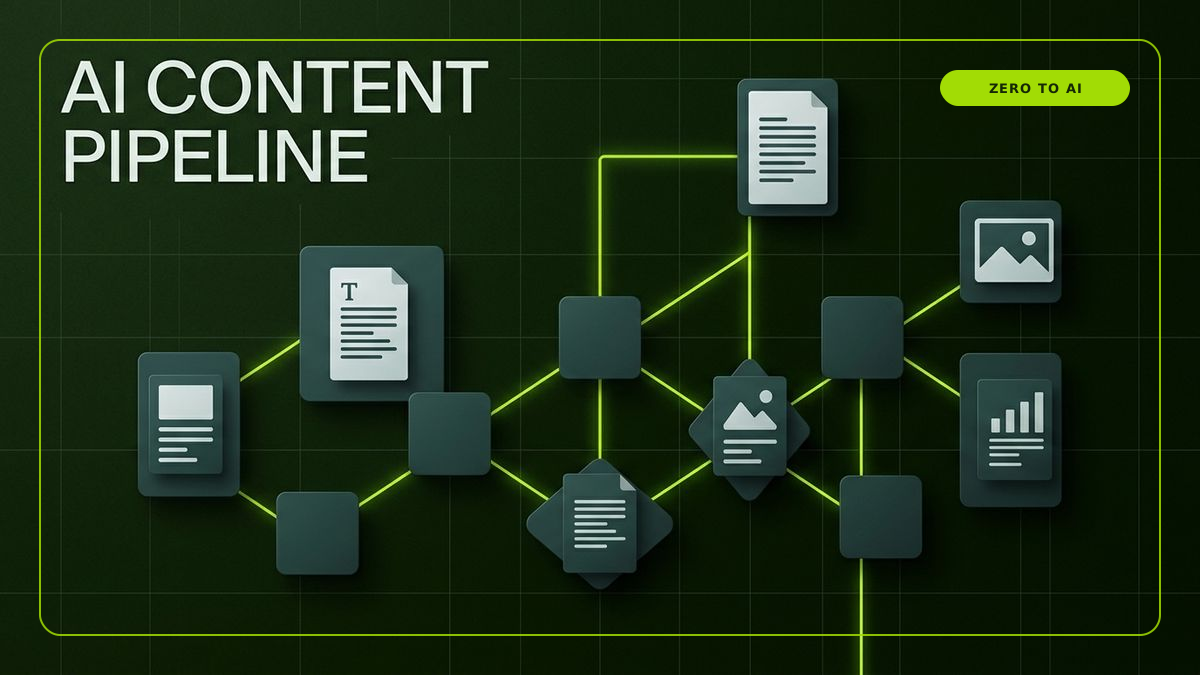
Solopreneurs and small businesses build a no-code AI content marketing pipeline by linking Perplexity AI, ChatGPT, Make.com, and Notion to automate content research, drafting, and multi-channel scheduling.
Content marketing remains one of the highest-ROI growth channels for Indian solopreneurs, agencies, and small business owners. However, consistently producing high-quality articles, social posts, newsletters, and lead magnets requires immense creative energy and bandwidth. Single-person businesses and lean teams often struggle to maintain publication schedules while managing daily client operations. In 2026, building an automated no-code AI content marketing pipeline enables small teams to operate with the content output of a full marketing department.
By combining specialized research tools, conversational AI models, and visual workflow automation, business owners construct end-to-end content production systems with zero coding required.
Manual Content Creation vs Automated AI Content Pipeline
Understanding the operational differences between manual content production and an automated AI pipeline highlights key time savings:
Workflow Stage | Manual Content Creation | Automated No-Code AI Pipeline |
|---|---|---|
Topic Research | 3 to 5 hours searching blogs & forums | Perplexity AI aggregates real-time trends in 5 minutes |
Content Outline | 1 to 2 hours manual structure design | Claude Pro generates structured SEO outlines in 2 minutes |
First Draft Writing | 4 to 6 hours writing & revising | ChatGPT Team drafts long-form copy in 3 minutes |
Formatting & Formatting | 1 hour manual styling & copy-paste | Make.com formats & pushes text directly to Notion CRM |
Asset Creation | 2 hours designing graphics manually | Canva AI generates branded social graphics automatically |
Total Weekly Time | 12 to 16 hours per article | Under 45 minutes of review & approval per article |
The 4 Core Stages of a No-Code AI Content Pipeline
An effective no-code AI content marketing pipeline consists of four interconnected visual modules:
[Trend Research Node] ──> [AI Outline & Draft Engine] ──> [Notion Review Queue] ──> [Multi-Channel Distribution]1. Automated Trend & Keyword Research
The pipeline begins by identifying high-intent topics relevant to your target audience. Using Perplexity AI or RSS feeds connected via Make.com, the system monitors industry discussions across Reddit, LinkedIn, and trade news to surface trending questions.
2. AI Outline & Draft Generation
Once a topic is approved, the system passes the brief into an advanced language model (such as ChatGPT Team or Claude 3.5 Sonnet). The model applies customized brand tone guidelines and target persona instructions to generate a comprehensive first draft.
Content Generation Prompt Blueprint:
"You are the Lead Content Strategist for an Indian B2B service agency.
Task: Write a 1,500-word educational guide on {Topic} targeting non-technical business owners.
Rule 1: Open with a concise 20-word direct answer summarizing the main solution.
Rule 2: Include a structured markdown comparison table comparing traditional methods vs modern automation.
Rule 3: Maintain a professional, clear, and actionable tone with zero marketing fluff."
3. Human Quality Review & Editing Queue
Automated content must always undergo human review. The generated draft is pushed directly into a Notion or Airtable content database. A team member spends 15 minutes checking facts, adjusting brand voice nuances, and approving the final copy.
4. Automated Multi-Channel Publishing
Upon approval in Notion, webhooks trigger Make.com workflows that automatically schedule and distribute snippets across your blog, email newsletter, LinkedIn page, and Twitter feed.
Step-by-Step Blueprint to Launch Your Content Pipeline
Follow this 5-step blueprint to build your automated content engine in 60 minutes:
- Select Core AI Writing Tools: Set up ChatGPT Team or Claude Pro to act as your primary drafting assistant.
- Create a Central Content Hub: Build a simple Notion database with columns for Topic, Status, Draft, and Publish Date.
- Build the Make.com Automation: Create a visual workflow linking your research input, ChatGPT API, and Notion database.
- Define Your Brand Voice Persona: Document clear writing rules, target customer pain points, and forbidden phrases in a reusable prompt template.
- Establish a Weekly 30-Minute Review: Schedule 30 minutes every Monday to review, refine, and approve the automated content queue.
Frequently Asked Questions (FAQs)
Can an automated AI content pipeline replace human marketers entirely?
No. An AI content pipeline handles initial research, structuring, and drafting, while human oversight ensures brand alignment, strategic direction, and factual accuracy.
Is coding knowledge needed to set up an AI content pipeline?
No. All platforms in the stack—including Make.com, Notion, ChatGPT, and Canva—use visual drag-and-drop interfaces designed for non-technical users.
How much does it cost monthly to run an automated AI content pipeline in India?
A complete no-code AI content pipeline costs between ₹1,600 and ₹3,500 per month in software subscriptions, replacing thousands of rupees in external writer fees.
Will search engines penalize AI-generated content published through pipelines?
Google evaluates content based on quality, original value, and helpfulness rather than how it was created. Ensuring human editorial review guarantees high search compliance.

Learn to build AI workflows that handle your busywork — live sessions, real projects, zero code.
See the courseBeginner-friendly