.jpg&w=1080&q=75)
Reflective Separation: The AI Breakthrough That Just Changed Computer Vision Forever

Reflective Separation: The AI Breakthrough That Just Changed Computer Vision Forever
Seeing through the invisible.
March 26, 2026, brought a breakthrough in fundamental AI research that will have long-lasting effects on everything from photography to robotics. A team led byProfessor Jae-Young Simhas officially unveiled a new AI model that solves one of computer visions most persistent problems:Reflective Separation.
A Breakthrough Revealed: Professor Jae-Young Sim’s New Model
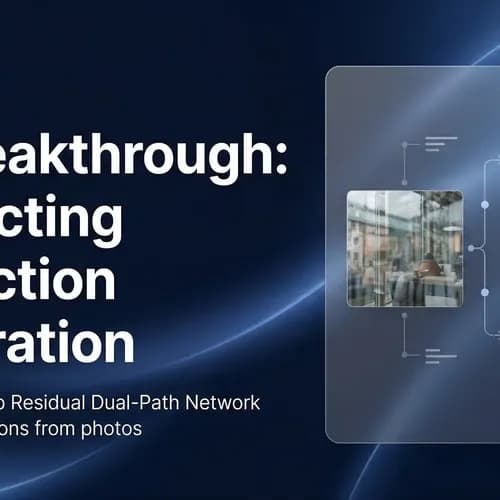
The research, presented today, focuses on Reflective Separation in the Wild. In plain terms, the team has created an AI that can look at a photo taken through a window—where annoying reflections usually block the view—and perfectly separate thereflectionfrom thetransmitted image.
It’s the equivalent of digitally removing the glass between the camera and the subject in real-time.
Why Reflection Separation was the Holy Grail of Computer Vision
For over a decade, computer vision researchers have struggled with reflections. For a machine, distinguishing between a real object and a reflection of an object is incredibly difficult. This has led to countless errors in security cameras, autonomous vehicles, and automated inspections.
Before today, removing these reflections required manual, pixel-by-pixel editing or extremely expensive polarized lenses. Now, it’s a single software layer.
How It Works: The In-Wild Neural Net Approach
What makes the In-Wild model unique is that it doesnt need to know anything about the window or the lighting. It uses aDeep Residual Dual-Path Networkto analyze the subtle differences in light physics for reflected vs. transmitted light.
By identifying the depth and refraction of each pixel, the AI can mathematically peel away the reflection, leaving a crystal-clear original image behind.
Beyond Better Photos: From Security to Self-Driving Cars
The implications of this breakthrough go far beyond just cleaning up your vacation photos.
- Security & Surveillance: This allows cameras to seeintobuildings or vehicles even in harsh glare, significantly improving forensic accuracy.
- Autonomous Vehicles: Self-driving cars often struggle with reflections on road signs or wet pavement. This AI will help them see the true road surface through the glare.
- Industrial Automation: In factories where quality control happens through glass enclosures, this will drastically reduce false positives in defect detection.
The Future of Transparent AI: What This Means for Augmented Reality
For theZero to AIcommunity, the most exciting application is inAugmented Reality (AR).
One of the biggest hurdles in AR is making digital objects look real when viewed through transparent glasses. This new model will help AR headsets better understand the reflections on their own lenses, allowing for a much more seamless and immersive blending of digital and physical worlds.
The world is becoming transparent to AI, and the Invisible Glass problem has just been solved.
Learn to build AI workflows that handle your busywork — live sessions, real projects, zero code.
See the courseBeginner-friendly