.jpg&w=1080&q=75)

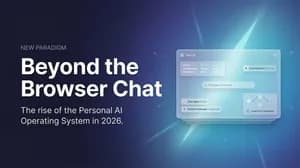
The Rise of Personal AI Operating Systems: Beyond the Browser Chat

The Rise of Personal AI Operating Systems: Beyond the Browser Chat
For the last three years, we have been visiting AI. We go to a website, type into a box, and wait for a reply. It’s a destination. But as we move deeper into 2026, the paradigm is shifting. AI is no longer a place you visit; it is the environment you live in.
Welcome to the era of thePersonal AI Operating System (PAIOS).
If you are still just chatting with a bot in a browser, you are using 2023 technology. Here is why the Personal AI Operating System 2026 is the most important tech shift since the smartphone.
From Browser Chat to Local Execution
The Chat GPT era was defined by centralized, cloud-based interaction. Your data went to a server, was processed, and came back. In 2026, power users have moved Local.
APersonal AI OSruns directly on your hardware (or your private cloud). Using tools like Ollama and local-first frameworks, your AI doesnt just chat'—it manages your file system, your emails, and your hardware components autonomously.
Why this matters:
- Zero Latency: No waiting for server queues.
- Privacy: Your Digital Soul never leaves your machine.
- Offline Intelligence: Your agents work even when the Wi-Fi is down.
The Desktop is Dead; The Agentic Canvas is Here
In a traditional OS (Windows, macOS), you are the File Manager. You click folders, open apps, and copy-paste data between them.
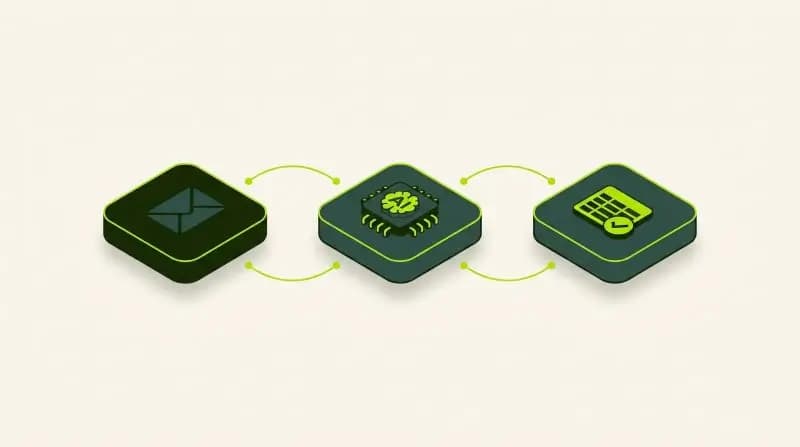
In aPersonal AI OS, you are the Strategic Director. Instead of apps, you haveAgents.
- You dont open Excel'; you tell your OS:Analyze this quarters spending and alert me if were over budget on SaaS.
- You dont Write an Email'; you say:Draft a follow-up to the design team and attach the latest system architecture diagram.
The OS understands thecontextof your files and theintentof your words. It is no longer a tool; it is a collaborator.
Digital Sovereignty: Reclaiming Your Data
The biggest driver forPersonal AI Operating Systems in 2026is the Data Sovereignty movement. When you use a cloud OS, the provider owns the metadata of your life.
A Personal AI OS uses aLocal Vector Database(your agents long-term memory) to keep your personal history, preferences, and private documents organized. This Memory stays on your device. It means your AI knows your daughters birthday, your favorite coding style, and how you like your coffee—without a massive corporation knowing it too.
How to Move to an AI-Native OS Today
You dont have to wait for a Windows 12 AI Edition. You can start building your personal agentic environment now:
- Hardware Selection: Invest in NPU-heavy (Neural Processing Unit) hardware. In 2026, RAM is less important than VRAM.
- Local Models: Use frameworks likeOpen WebUIorStargateto run open-weights models (like Llama 3 or Mistral) locally.
- Agentic Workflows: Usen8norLangChainto connect your local model to your local files and system commands.
Conclusion: The Final Frontier of Computing
The goal of computing has always been to remove the Friction between thought and action. The Personal AI Operating System is the final step in that journey. It is the moment where the computer finally stops asking you to learn its language and starts learning yours.
The question for 2026 is no longerWhich AI do you use?butIs your Operating System smart enough to work for you?
Ready to Go Local?
[Download our Zero To AI Guide to Setting Up Your Local Agentic OS] and stop sending your thoughts to the cloud.
FAQ
Q: Does an AI OS require a supercomputer?In 2026, most mid-range laptops with an NPU can run efficient 7B-14B models smoothly. For heavier tasks, many users use a Private Home Server.
Q: Is it harder to use than Windows?Currently, it requires a Workflow Architect mindset. But the interface is becoming more conversational every day.
Q: Can I still run my old apps?Yes! A Personal AI OS sitson topof orwithinyour traditional environment, acting as an intelligent wrapper that controls your existing software.
Learn to build AI workflows that handle your busywork — live sessions, real projects, zero code.
See the courseBeginner-friendly