.jpg&w=1080&q=75)
Vibe Coding for Solopreneurs: How Non-Coders Are Building Micro-SaaS in 2026

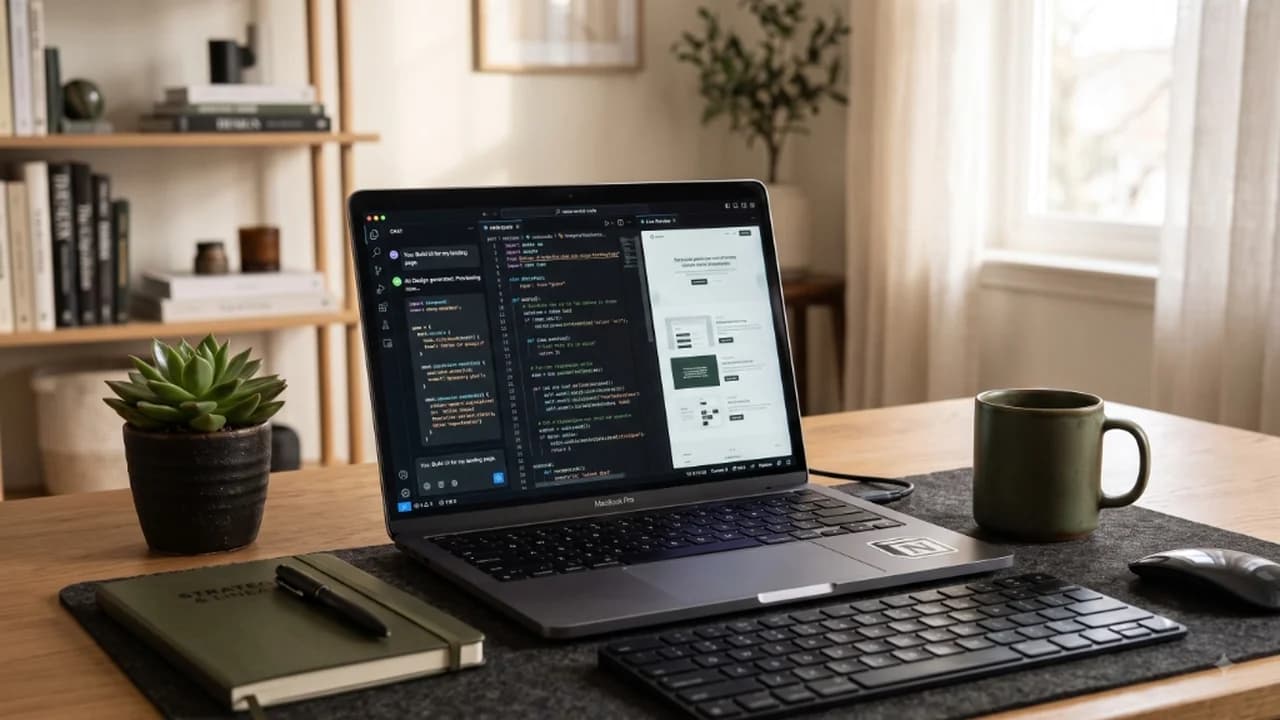
For decades, launching a software product required either spending years learning syntax, frameworks, and deployment pipelines, or spending ₹5,00,000+ hiring development agencies. In 2026, that barrier has dissolved.
The rise of "Vibe Coding"—a workflow popularized by AI researchers where creators describe intentions in plain English while AI agents write, test, and debug code—has turned non-technical founders into full-stack product builders.
At Zero To AI, our mission is to make technology accessible to every professional. This guide explains how vibe coding works, the exact tools you need, and how non-coders are shipping revenue-generating tools in days.
1. What is Vibe Coding?
Vibe coding is an AI-assisted software creation method where non-technical builders direct AI coding assistants in natural language to design, generate, and deploy applications without manually writing or debugging code.
Instead of writing functions line by line, you act as the Product Manager and Creative Director. You provide the vision, user flow, and business logic, while autonomous AI coding assistants (like Google Antigravity, Cursor, and Claude Code) handle file creation, package installation, and bug fixes.
2. Vibe Coding vs. Traditional Software Development
Dimension | Traditional Coding | No-Code App Builders (Bubble/Webflow) | Vibe Coding (AI-Native) |
|---|---|---|---|
Learning Curve | 6–12 months of syntax study | 2–4 weeks of platform-specific rules | 1–2 days of prompt alignment |
Customization Freedom | 100% full flexibility | Constrained by platform plugins | 100% full code ownership |
Development Speed | Weeks or months | Days or weeks | Hours to days |
Vendor Lock-In | None (You own the code) | High (Tied to platform pricing) | None (Standard open-source code) |
Cost to Prototype | ₹50,000 – ₹5,00,000 | ₹2,500 – ₹10,000 / month | ₹0 – ₹1,500 (API tokens) |
3. The 4-Step Vibe Coding Workflow for Solopreneurs
[ 1. PRD / Vision Document ] ──► [ 2. Agentic Prompting ]
│
▼
[ 4. 1-Click Cloud Deploy ] ◄── [ 3. Live Visual Feedback ]
Step 1: Write a Simple Product Requirement Document (PRD)
Before opening an AI tool, write a 1-page markdown brief describing:
- Who the user is.
- The 3 core actions they must accomplish on the page.
- What happens when they click buttons (e.g., submit form, generate PDF, display table).
Step 2: Set Up an Agentic Coding Environment
Use modern agentic coding environments like Google Antigravity or Cursor. Load your PRD into the project context and prompt the assistant:
"Build a single-page Next.js calculator for Indian freelancers to compute GST and TDS deductions. Use clean Tailwind CSS with solid flat colors (cream background #fbf6f0 and dark slate #2a4e46). Make it responsive on mobile."
Step 3: Iterate Using Visual Feedback
Run the local dev server. If an element looks misaligned or a calculation throws an error, take a screenshot or copy the error message and paste it directly back to the AI:
"The TDS dropdown is calculating at 10% instead of 1% for 194C. Fix this calculation and add a copy-to-clipboard button for the summary."
Step 4: Deploy with 1-Click to Vercel or Netlify
Connect your GitHub repository to Vercel. Your functional micro-tool is now live on a global CDN with a custom domain at ₹0 hosting cost.
4. 3 Profitable Micro-SaaS Ideas Non-Coders Can Build This Weekend
- Local Lead Magnet Calculators: ROI calculators for real estate agents or solar installation agencies.
- Document & Invoice Formatters: Custom GST-compliant PDF invoice generators for Indian freelancers.
- Internal Team Dashboards: Google Sheets to web portal converters for client reporting.
5. Frequently Asked Questions (PAA)
Do I need to understand Git or Terminal commands?
No. Modern AI tools execute terminal commands and manage file trees automatically. You only need to verify that the app works in your browser.
Is vibe coding reliable for production businesses?
Yes. Micro-SaaS products built with AI adhere to standard web architectures (React, Next.js, SQLite, PostgreSQL). Once tested, they run reliably on standard cloud infrastructure.
Conclusion & Next Steps
Vibe coding is democratizing software creation. The advantage no longer belongs to those who memorize syntax, but to those who understand user problems and can articulate solutions clearly.
Start building your digital products today with step-by-step guidance from [Zero To AI](https://zerotoai.in).
Learn to build AI workflows that handle your busywork — live sessions, real projects, zero code.
See the courseBeginner-friendly