.jpg&w=1080&q=75)
what's an AI Agent? Complete Non-Technical Guide for Business Owners & Solopreneurs in 2026

An AI agent is an autonomous software program that uses large language models to evaluate goals, make decisions, execute multi-step tasks, and interact with external applications without continuous human prompts.
While standard AI chatbots like ChatGPT require users to manually type prompts for every individual answer, autonomous AI agents represent the next evolution in artificial intelligence. In 2026, small business owners, freelancers, digital marketers, and agency founders across India utilize AI agents as digital team members. Once configured with specific system instructions and software integrations, an AI agent can monitor incoming customer inquiries, query company databases, generate custom proposals, and update accounting software independently.
Understanding the core architecture and practical business applications of AI agents enables non-technical founders to scale operational capacity without increasing payroll costs.
Chatbot vs AI Agent: Structural Differences
Comparing standard AI chatbots against autonomous AI agents highlights the leap from passive assistance to proactive execution:
Feature Dimension | Standard AI Chatbot (e.g. Basic ChatGPT) | Autonomous AI Agent (e.g. n8n + Claude Workflow) |
|---|---|---|
Trigger Mechanism | Manual user text prompt | Automated system trigger (Webhook, Email, Schedule) |
Execution Scope | Single-turn answer or text generation | Multi-step task execution across multiple software apps |
Software Integration | Isolated inside a chat interface | Connected to Gmail, WhatsApp, Notion, & Zoho Books |
Operational Autonomy | Passive; stops after delivering text | Active; makes logical decisions & completes workflows |
Human Involvement | Requires continuous prompting | Requires minimal supervision post-configuration |
The 4 Core Components of an Autonomous AI Agent
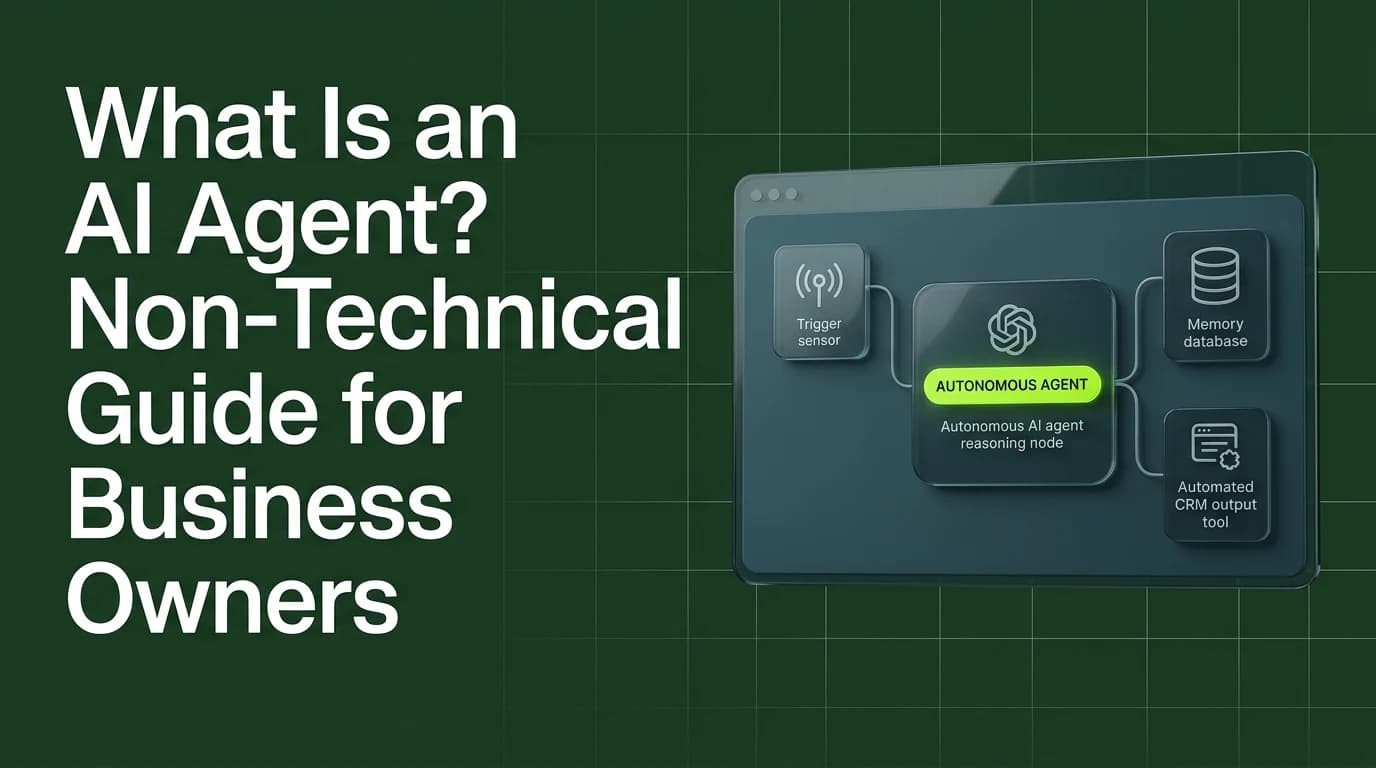
Every functional AI agent relies on four interconnected structural layers:
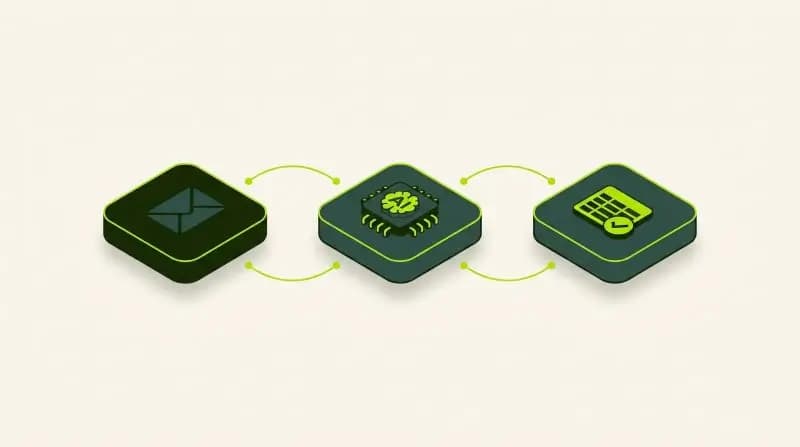
[Sensor / Trigger] ──> [Brain / LLM Engine] ──> [Memory / Knowledge Base] ──> [Actuator / Tool Integration]1. Sensor / Trigger Layer
The input mechanism that detects external events, such as a new form submission, an unread customer email, a calendar event, or a recurring timer.
2. Brain / LLM Engine
The reasoning core (powered by models like Anthropic Claude 3.5 Sonnet or OpenAI GPT-4o) that evaluates incoming information and plans the required steps to achieve the goal.
3. Memory & Knowledge Base
The contextual storage system that provides the agent with access to company SOPs, product catalogs, customer histories, and past conversation logs.
4. Actuator / Tool Integrations
The execution layer that allows the agent to interact with external software APIs—sending emails, issuing invoices, drafting documents, or updating databases.
4 Practical Business Use Cases for AI Agents in 2026
Small businesses and solopreneurs deploy no-code AI agents to handle routine operational workloads:
- Automated Lead Qualification Agent: Receives web inquiries, evaluates budget and scope requirements, checks team calendars, and dispatches booking links to qualified prospects.
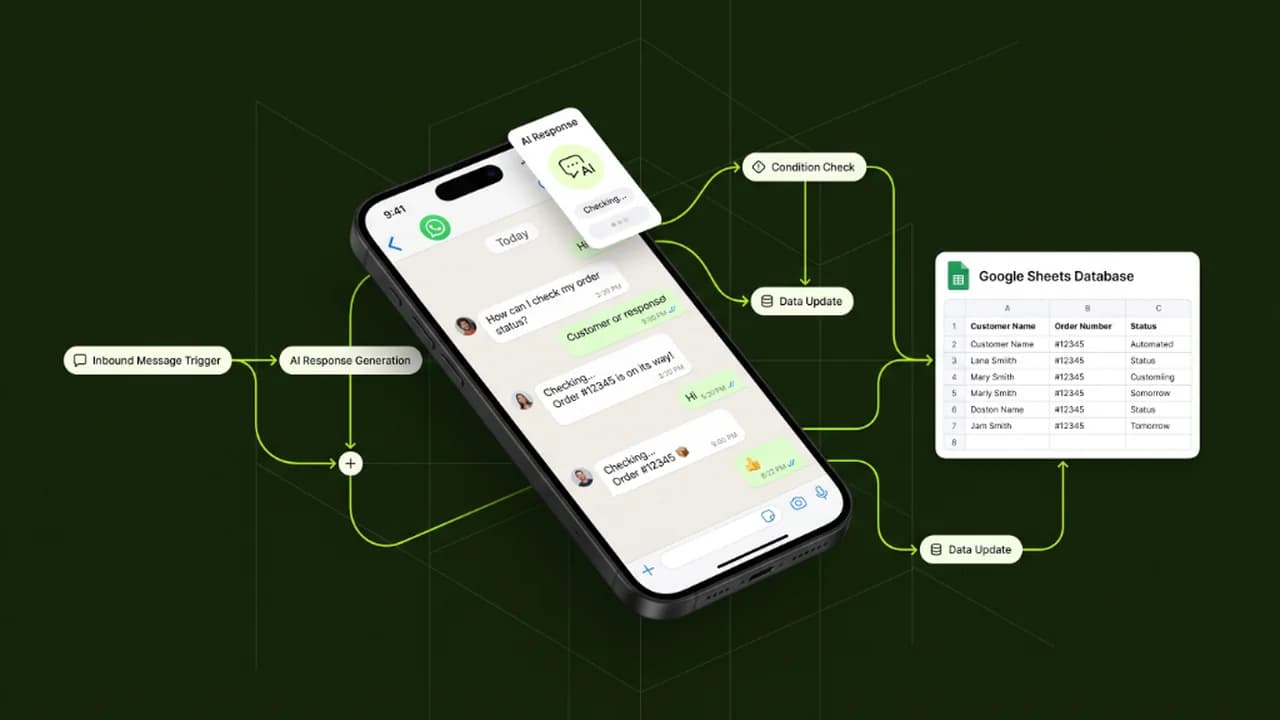
- Customer Support & FAQ Agent: Operates 24/7 on WhatsApp Business API to answer product questions, check order statuses, and escalate complex issues to human managers.
- Proposal & Scope Drafting Agent: Transcribes discovery call recordings, extracts client deliverables, populates Notion templates, and drafts formal PDF proposals.
- Competitor Monitoring Agent: Scans industry news feeds daily, summarizes competitor updates, and delivers an executive brief to Slack every Monday morning.
Frequently Asked Questions (FAQs)
What is the simple definition of an AI agent?
An AI agent is a smart software program that uses artificial intelligence to achieve specific goals autonomously by making decisions and executing multi-step tasks across different software applications.
How does an AI agent differ from ChatGPT?
ChatGPT is a conversational assistant that responds when you ask a question, whereas an AI agent can run automatically in the background, make logical decisions, and perform tasks across multiple apps without manual prompting.
Do I need programming skills to create an AI agent?
No, visual no-code automation platforms like n8n and Make.com allow non-technical business owners to build custom AI agents using drag-and-drop nodes.
Is it safe to let AI agents run business operations autonomously?
Yes, provided you establish clear guardrails—such as setting read-only database permissions, configuring usage limits, and requiring human approval for high-value financial transactions.
Learn to build AI workflows that handle your busywork — live sessions, real projects, zero code.
See the courseBeginner-friendly